

|


yoga@synergy-yoga.com

|

Hatha Yoga, the science of yoga postures of
asanas, is taught from the standpoint of its benefits to the body in many
schools. From this point of view, yoga postures as a system for achieving
longevity and radiant health stands supreme.
Old age and sickness settle first in the joints and in the spinal discs. Medical
studies have revealed that these spinal discs often begin to show signs of
degeneration as early as thirty years of age. Yoga postures make the joints
flexible, while they stretch and irrigate the spinal vertebrae — keeping them
youthful even late into old age.
The postures promote the free flow of energy throughout the nervous system and
assist in the elimination of toxins and poisons from the joints and other body
parts, where these foreign elements tend otherwise to settle — sometimes
permanently. These yoga postures exert a beneficial pressure on various glands
and internal organs, flushing and stimulating them. Even a small amount of
practice can produce amazing improvements in one's general health. For these
reasons Hatha Yoga is growing in popularity in the West, and growing very
rapidly. Asanas are well on their way to becoming a fad.
However, more is involved in asanas than just the promotion of physical health.
Through yoga postures one can improve his mental outlook, achieve a more
harmonious emotional life, and develop more vital awareness.
Certain bodily postures are associated with certain mental attitudes. When one
is discouraged, the body tends to stoop forward. When feeling stubborn, a person
may jut his chin forward. Suppression of natural feelings can be indicated by
holding in the upper part of the chest. Even the pattern of breathing is
affected by one's mental attitudes.
Just as mental attitudes affect the body, so also can bodily postures affect the
mind. Tense stomach muscles can induce mental anxiety and a bent spine & slumped
shoulders can induce moodiness. Yogis make use of these relationships and by
inducing physical relaxation encourage serenity in a worried mind. Working on
oneself physically to influence the mind is a simple undertaking, e.g., change
the breathing pattern and one's mental state may be changed as well. Yoga
postures not only improve physical health and give stability to the emotional
system, but they also create positive mental attitudes.
Yoga postures are very different from ordinary calisthenics. They emphasize
relaxation as well as making one aware of tension. Unlike most physical exercise
they do not excite; rather, they eliminate excitement from the system. A yoga
pose is not "done" because the physical position has been assumed. It is resting
in the pose that develops the physical health and calms the system. One acts
always from a center of poise and calmness of mental and physical relaxation.
One must never strain or force into the prescribed position.
In summary, the yoga postures are not only a series of physical positions, but
exercises in mental awareness. The yogi is deliberate in every movement, feeling
into every muscle. Only through conscious awareness of one's own body can
tensions be felt; and once felt, they can be eliminated by a systematic yoga
program.
Benefits of Yoga
-
Alleviates stress
-
Increases muscle tone and flexibility
-
Develops strength and concentration
-
Energizes the nervous system
-
Strengthens the immune system
-
Normalizes body weight
-
Eliminates toxins
-
Creates a greater sense of well-being
-
Promotes peace of mind
Meditation
Yoga means union: the conscious uniting of the individual soul with the infinite Spirt, that many call God. The soul is already one with Spirit; yoga is a system of disciplines that helps us to realize that. The Eightfold path of the ancient Indian sage Patanjali is the pathway to the infinite (see page 29). The first two steps are concerned with proper moral behavior. The third deals with asana – proper postures for health and mediation. Later up the list we come to meditation, and finally at the top of the list is samadhi, or blissful union with God.
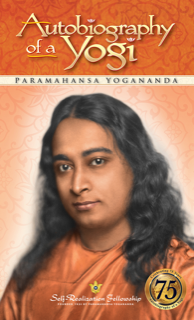
At our Ten-Day Trainings here at the Synergy Yoga Center we study all eight steps, with emphasis on asana — the hatha yoga postures we do daily. But we also practice meditation: twice daily during our Ten-Days, and throughout the week the rest of the time. Synergy Yoga’s founder, Peri Ness DeFay (along with many of the teachers and staff) is a follower of Paramahansa Yogananda, founder of the Self-Realization Fellowship (SRF), and practices meditation as he taught. Many people today do meditation just to calm their bodies and minds – what we call passive meditation. But the meditation of SRF is a more dynamic, yet relaxed, practice with the clear and direct goal of attaining realization of God. The calmness of body and mind will certainly come through this practice, but it is more than that. We were created by the infinite spirit of God, and eventually we will consciously return to that divine consciousness. The yoga meditation we are taught by Sri Yogananda combines asana (physical postures/exercises) with pranayama (life-force control) with mantra (repetition, often mentally, of certain divine sounds) with devotion. As Sri Yogananda says, the techniques of meditation will get you to the door of God; but one needs devotion to get through that door. Now many who practice hatha yoga just want to better their hatha practice, and are not interested in devotion or God. We respect that, but we feel that meditation and devotion are an important, integral part of the yogic life and process. We feel that you cannot separate meditation and the search for God from hatha yoga – although many teachers today try to do just that.
We do not teach any of the specific techniques of meditation that Sri Yogananda taught; they need to be learned directly through the SRF lessons, and only after much preparation and introduction. In India a devotee may wait many years before his guru gives him even a simple meditation technique. What we do at the Synergy Yoga Center, though, is to give a few basics. First is asana: sitting with a straight, relaxed spine, with eyes closed, focused at the point between the eyebrows. This is known as the spiritual eye, the bliss-consciousness center and is a reflection of the chakra (occult spinal center) at the medulla oblongata. In deep meditation one will eventually see the spiritual eye as a white star surrounded by a blue circular field surrounded by golden light. To awaken devotion, we begin our meditations chanting one of the chants that Sri Yogananda has given us, either composed by him or brought by him from India. Sri Yogananda, a divine avatar, has spiritualized all of his chants. That is, he entered the highest state of samadhi while chanting each chant in his collection Cosmic Chants. These chants can bring you very deep, but you must concentrate and allow the devotion in your heart center (the anahata chakra) to awaken. After ending the chant, one should continue to chant mentally, taking it deeper and deeper. Eventually the mental chanting will cease, and as one goes deeper within, he or she will become immersed in one of the manifestations of God: peace, joy, love, or bliss. We end our meditation chanting Om, which is the divine sound of creation at its deepest level. |